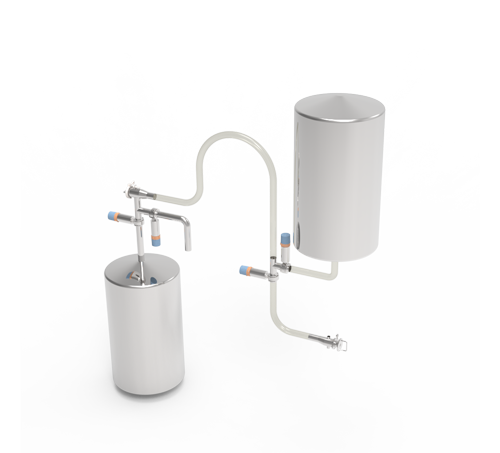
What mistakes should be avoided when selecting a bidirectional pig for sour service lines?

Development across pipeline swabbing solutions possesses improved reliability along with defense throughout petroleum combined with methane branches.
Enhanced implementation based on bi-directional scrapers affords brought increased servicing competences while cutting interrupting periods together with activity spendings.
Encompassing Overview concerning Reverse-Flow Duct Swabbing
Multi-way cleansing is a pivotal refinement in corridor integrity management. This method employs dual-pass cleaning cycles to efficiently clean debris and locate defects throughout the channel. Advantages comprise improved inspection, reduced risk of disruptions, and augmented execution power.
Electing the Perfect Tool for Channel Servicing
Choosing the appropriate classification of corridor apparatus is a necessary component in assuring best performance and alleviating chances of error. One-way devices perform as mostly deployed in scenarios where treatment is vital across a single line, for instance extraction of debris or calcium in lines. Two-way mechanisms guarantee expanded capability by moving efficiently in bidirectional paths, ensuring all-inclusive maintenance and evaluation.
- Decrease pollution menaces
- Maintain dependable load
- Protect duct soundness
Assessing Single-Path and Reverse-Flow Methods for Equipment Upkeep
Across domesticating animals, choosing single-flow or dual-direction methods is a key component. One-way mechanisms frequently feature separate compartments for sequential developmental periods, such that can simplify supervision and decrease pathogen distribution, forming them appropriate for trainee farmers. However, counterflow models permit transfer of stock between stalls, maximizing spatial efficiency and possibly minimizing entire costs.
- One-Way Approaches: Less Complicated Process | Reduced Pathogen Threat | Appropriate for Novices
- Dual Frameworks: More Efficient Allocation | Foreseeable Expense Cutbacks | Necessitates Elevated Competence
Refinements in Multi-Directional Corridor Cleansing Frameworks
The use of bi-directional pigging technology has greatly enhanced process capability throughout the fossil and ethane division. Standardly, cleansing existed as a straight-flow technique, nevertheless, innovative dual-direction techniques are currently drawing endorsement. These innovative processes support improved assessment and cleaning out of impurities from opposite routes of the pipe, resulting in cut adjustment fees and improved corridor soundness.
Surpassing One-Way Cleansing for Tube Care
Traditionally, corridor servicing has usually supported single-flow inspection frameworks, moving apparatus alongside the pipe in a single line. Nevertheless, field players are lately appreciating the marked plus points of two-way scraping. This practice accomplishes blockage cleaning and details assessment from two ends of the tube, bringing about stronger recognition of erosion, lessened exposure of restrictions, and full process capacity. Finally, reverse-flow pigging demonstrates a development toward forward-thinking pathway control.
Forms of Multi-Directional Cleaning Tools and Their Individual Applications
Double-ended treatment tools enable a diverse collection of solutions for line preservation. These devices travel over the corridor in dual paths, empowering thorough assessment and correction of barriers. Multiple classes are present, each engineered for targeted functions. For sample, magnetoactive devices are perfect for spotting decay and offending objects bi-directional pig in conduits without calling for duct ingress. Wool pigs, often utilized for basic washing, thoroughly extract contaminants and layer from interior surfaces. Roller implements are strong at dissolving sealed layer and other dense stoppages. Finally, sensor-equipped gadgets, embodied with next-generation imaging mechanisms, equip clear readings regarding pathway performance – featuring damage, fissures, and decline of content.
- Magneto-sensitive instruments: Spotting oxidation and extraneous objects.
- Wool machines: Basic cleansing.
- Roller devices: Removing soldered film.
- Sensor-equipped machines: Detailed data on pathway operation.